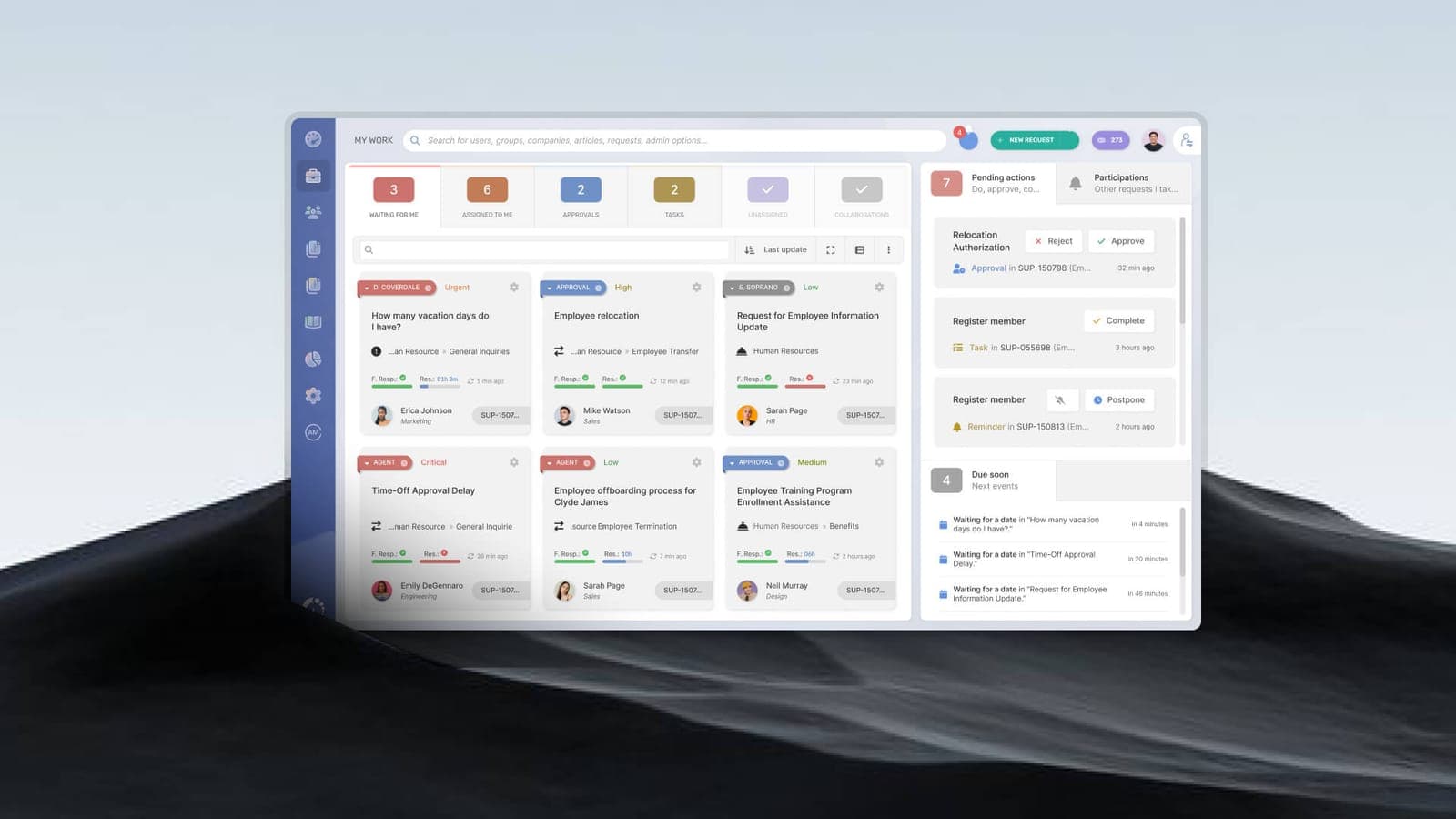

Everyone has experienced both kinds of IT helpdesk: the one that resolves your issue quickly and the one that leaves you on hold, repeating yourself, waiting days. The difference is rarely the people — it is the practices. Here are the ones that genuinely separate a great helpdesk from a frustrating one.
1. Make logging an issue effortless
Every issue should become a tracked ticket, logged easily by portal, email, chat, or phone. Nothing should depend on catching the right person — the system, not memory, holds the queue.
2. Triage and prioritise by impact
Not every issue is equal. Clear prioritisation tied to business impact — and to SLA targets — ensures the business-down emergency is handled before the routine request, and that nothing silently breaches.
3. Resolve at the right tier
Route common issues to fast first-line resolution and genuinely hard ones to specialists. Efficient escalation keeps both routine and complex issues moving without wasting expensive talent on password resets.
4. Measure the right things
- Response and resolution times against SLA — the core promise.
- First-contact resolution — how often issues are fixed without escalation.
- Ticket trends — to spot and remove recurring root causes.
- Satisfaction — whether the people being helped actually feel helped.
5. Reduce tickets over time
The best helpdesks make themselves quieter. By analysing trends and fixing root causes — plus self-service for common requests like password resets — ticket volume falls over time. A rising ticket count that never improves is a sign of symptom-fixing, not problem-solving.
Want a helpdesk that works like this — measurable, fast, and quietly improving? See how Satmz Support is structured, or talk to us.
Topics
- IT helpdesk best practices
- how to improve IT support efficiency
- IT support metrics
- ticket-based IT support